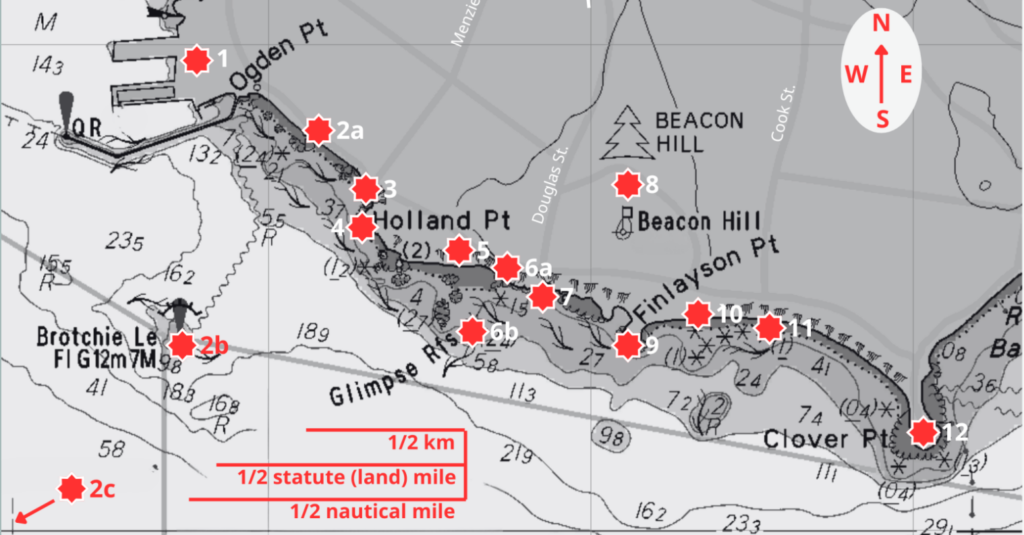
Dallas Road Waterfront Trail
Image source: Maritime Museum of British Columbia
Narrating My Process: What I Did and Why
Equipped with my Crocs, phone, a bottle of water, and my journal, I felt like I had everything I needed for the journey. I began my walk at the street level, the unofficial starting point before the land opens toward the water. From there, I followed the path along Dallas Road, moving from point to point with the intention of fully experiencing each place. I didn’t approach the walk with a rigid strategy; it was meant to be simple and intuitive. Still, I set a personal goal to reach every major lookout along the route. In the end, I made it to four, and I could see Ogden Point in the distance, which still felt meaningful.
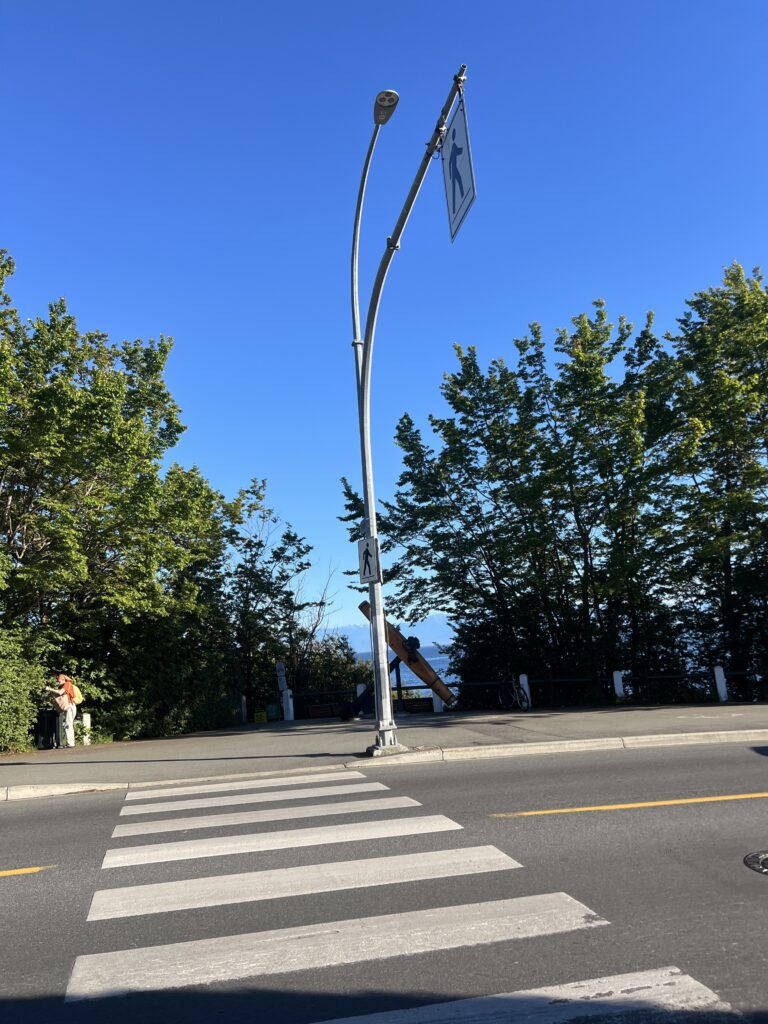
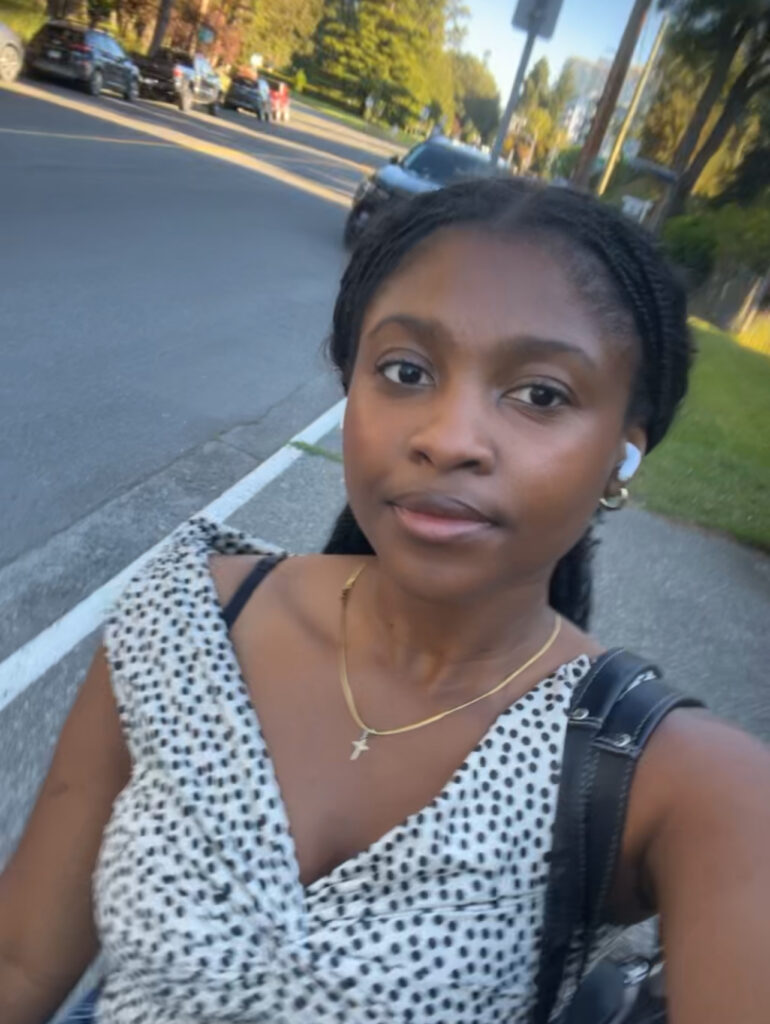
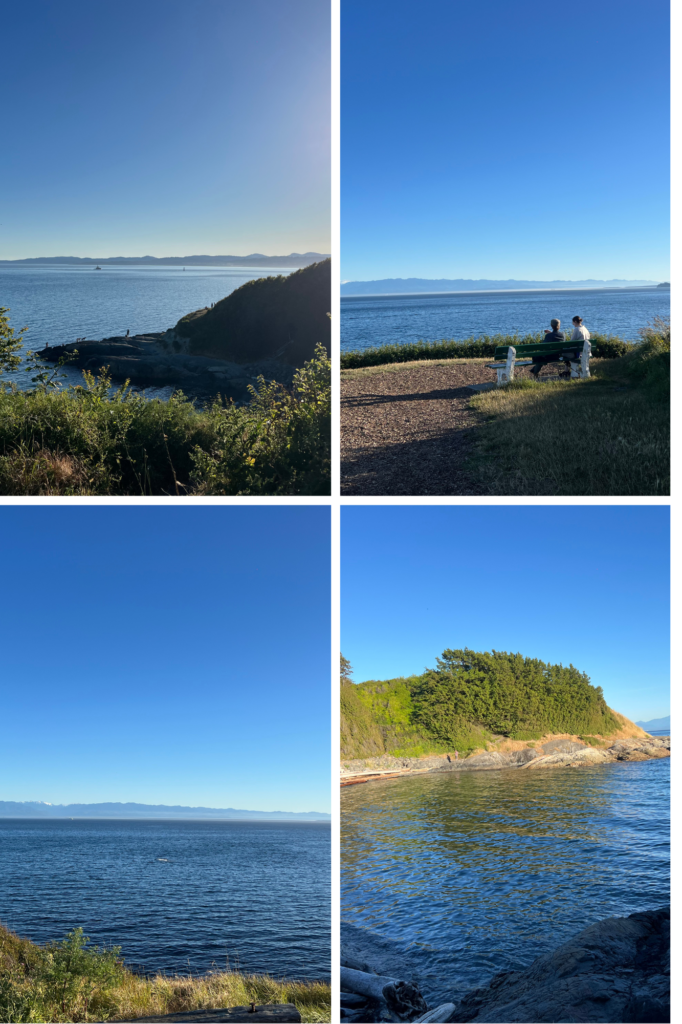
At the beginning, my pace was faster than I expected. There was so much to take in: the light shifting across the water, the movement of people, and most of all, my determination to find the perfect point to observe the sunset gave me an internal clock. But as I continued, the walk naturally slowed me down. I noticed benches tucked into the landscape, some almost hidden behind the trees. As I got closer, I realized most of them were dedicated to people who had once sat here and observed this same ocean view. When I finally stopped at one, it made me realize I didn’t actually need to rush anywhere. Sitting there for a moment, I let myself breathe and just take in the view. Those little pauses reminded me that the walk wasn’t something to finish quickly — it was something to actually experience.
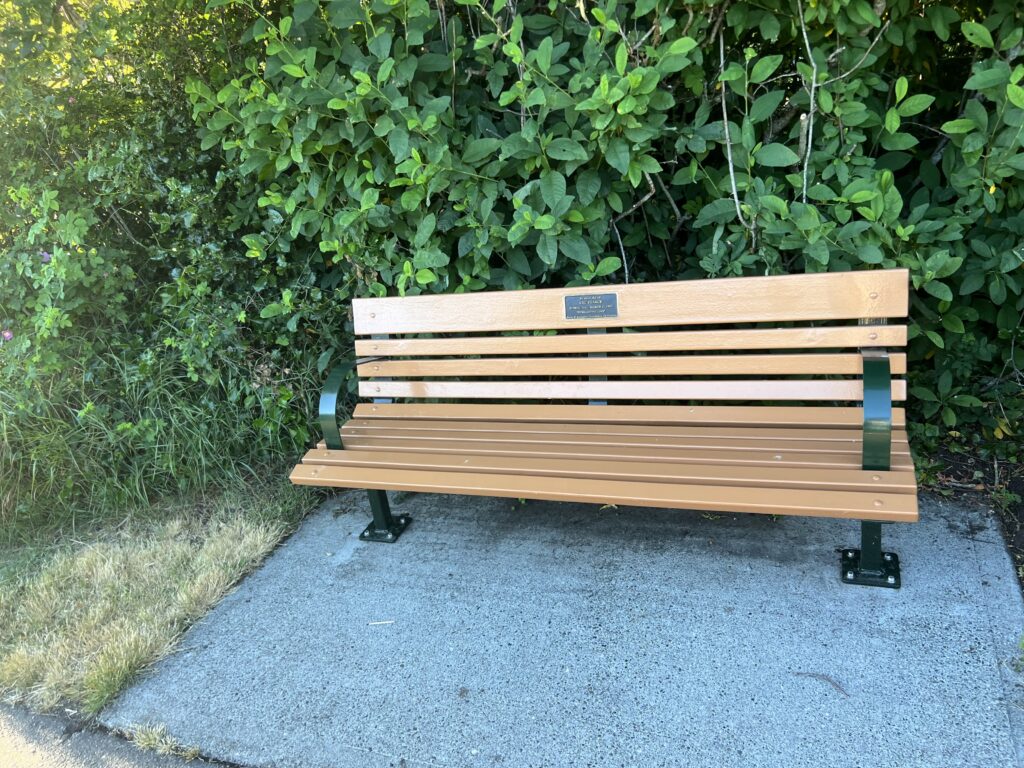
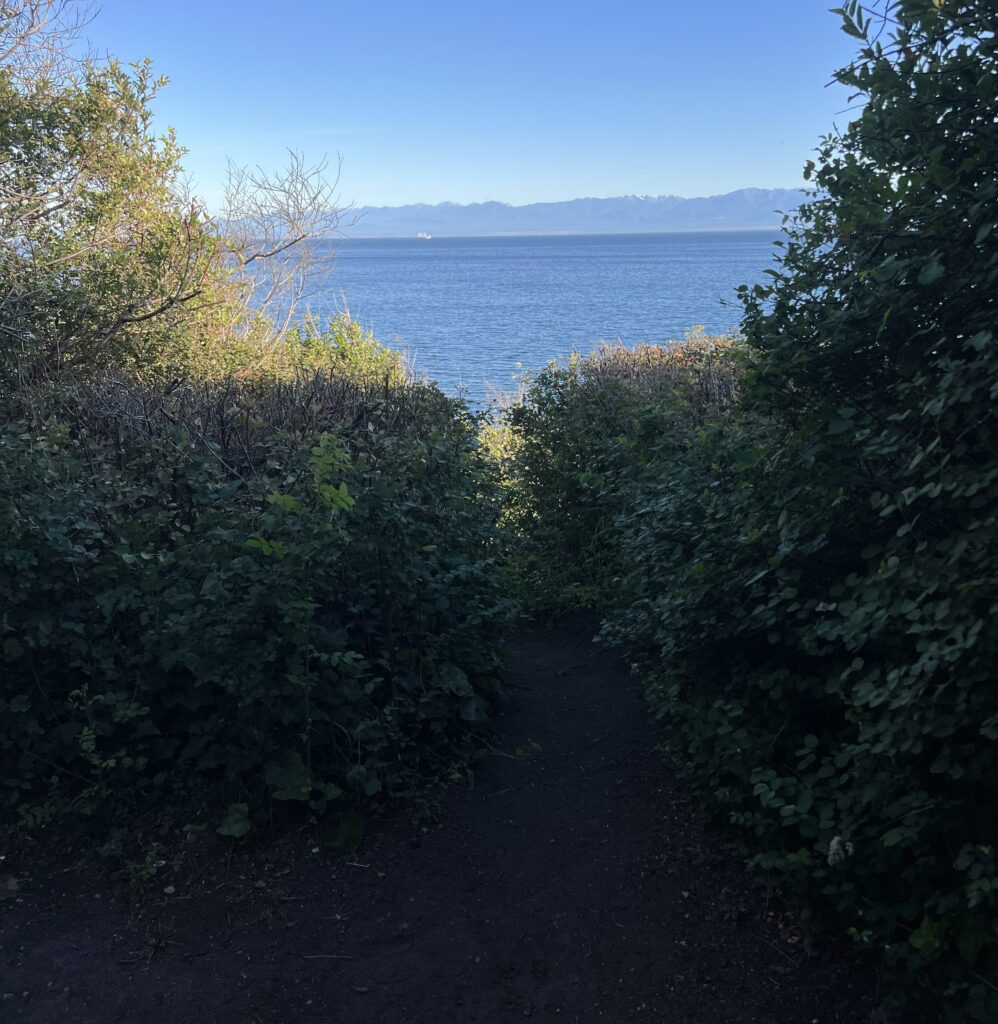
Along the way, I saw a few narrow shortcuts leading down toward the rocks. They were steep and uneven, and although part of me was curious, I chose not to take them — missing this due date was simply not an option for me.
Each point offered a different angle of the ocean, a different feeling in the air. Looking at the wide, open water reminded me just how small we are compared to everything around us. Each point was as beautiful as the next, and taking it all in made the walk feel genuinely meaningful. When I finally reached Holland Point, everything seemed to settle: the pace, the light, even my own thoughts. I chose that spot to watch the sunset; I could finally sit, relax, and journal.
The Experience
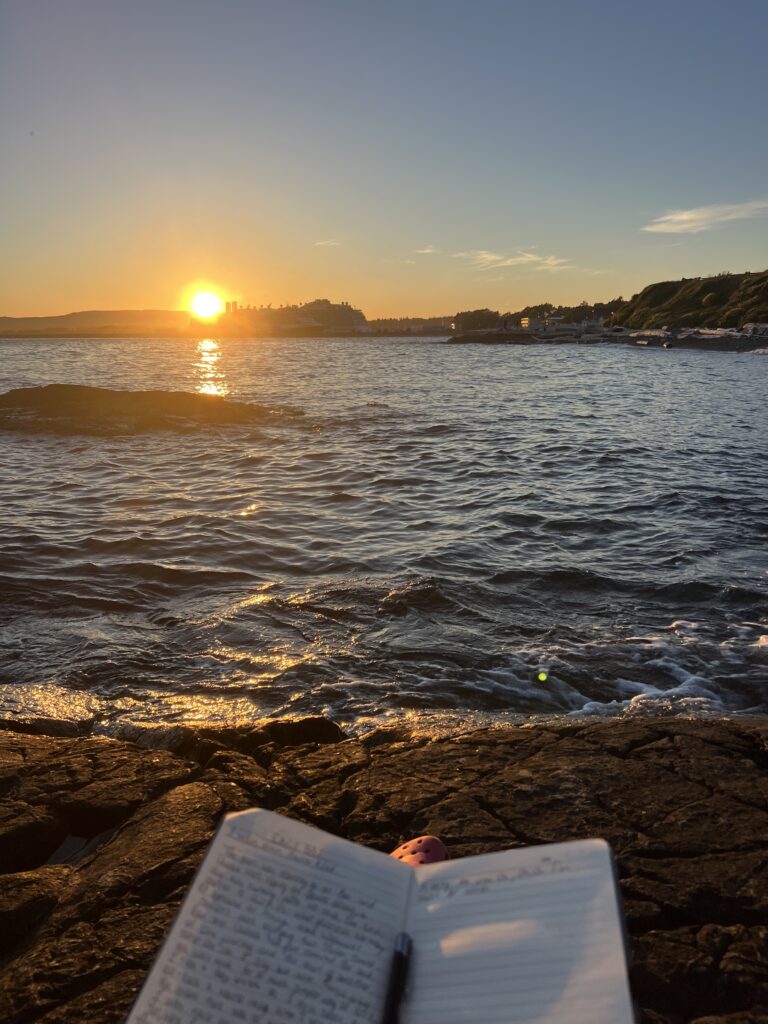
I chose a rock at Holland Point as my spot to observe the sunset. As I was looking for a place to sit, I walked past Ben and Chelsea, who were already deep into their djembe session. They told me they had frequently played together about twenty years ago and that they had only just reconnected. If they sounded this good now, I could only imagine what they were like then.
Ben and Chelsea ripping their djembes, a dog chasing after a stick with endless excitement, the birds starting to call out as the evening settles in, and the waves crashing against the rocks; it felt like something straight out of a movie, creating a harmony that almost didn’t feel real. This is what humans were made for: a much simpler way of life. This is exactly why I chose Dallas Road; in such a noisy world, it gives me space to put everything into perspective. I take a deep breath and try to savor it all, taking a mental image. When I had to leave St Kitts, there was so much uncertainty. I truly thought I was never going to see the ocean again. Yet here I am. What a privilege it is.
The time is 8:53, and it looks like the sun is finally starting to set. Oh, what a beauty. Holland Point begins to fill with more people coming to enjoy the view. All so different yet so alike. Different ages, genders, and races, all connected by the sheer beauty of the ocean shore. It’s one of those rare moments where you can actually feel what presence means, where the world slows down just enough for you to notice the small things that usually slip by.
As the sun fades behind the ship, I tell her goodbye — and who’s to say she can’t hear me. I end the day listening to “Pearls” by Sade. She sings, “She lives a life she didn’t choose,” a line that sits heavily with me. Under the same sky where I am in awe of the peace and beauty I get to enjoy, someone else has not eaten in days. There are forty-six abducted children and government officials in Nigeria who long to see their families again. There are women who no longer have freedom of speech. How did it ever get this bad?
I want to live in the moment, but how can I when this exact moment is so different for so many? It is a weight I carry, a burden I should not have to bear, yet it sits with me all the same — a reminder of how uneven the world is, even under the same sunset.
Integrating Peer Feedback
One of the suggestions from my peers was to include a map of my route. This was an amazing idea I had honestly never considered; I didn’t hesitate to include it. It immediately made sense, it added clarity, grounding, and a visual anchor for the reader. I’m genuinely grateful for this suggestion, and I made sure to thank my peer for giving me such a helpful tip.
Another piece of peer feedback suggested that I include audio recordings of the birds, waves, or other ambient sounds from my walk. I really appreciated this idea, and I actually gave it a try by recording several short audio clips during the walk. However, I ultimately decided to use video instead. The video format still allowed viewers to connect with the natural sounds, but it provided a richer sense of place through movement and visuals.
How My Media Choices Align with Mayer’s Theory of Learning
Pre‑training: I included a map at the beginning of my blog, which was actually a peer suggestion I immediately adopted. Adding the map gave readers a chance to understand the key locations before entering the full narrative. This helped them build a mental model of what I was doing and where the experience took place, making the rest of the story easier to follow.
Personalization Principle: I was very intentional in how I wrote the text. I used a conversational, human tone so the reader would experience the piece as an actual story rather than an academic essay. This approach helps readers feel more connected to me and to the moment I’m describing.
Contiguity Principle: I placed the map, images, and video directly beside the sections of text they relate to. This way, readers don’t have to scroll back and forth or mentally guess which visual matches which part of the story. The proximity between text and visuals helps them make immediate, natural connections between what they are reading and what they are seeing.
Segmenting: I structured my blog into clear, manageable sections so readers could move through the experience at their own pace. Breaking the content into segments made the narrative easier to process and reduced cognitive overload.
Coherence Principle: I originally wrote and observed much more during my walk, but I chose to cut out details that didn’t directly support the main experience. I also avoided adding extra visuals that might distract or overload the reader. Keeping only the most meaningful elements helped maintain clarity and focus.
Final Summary
This project really helped me slow down and pay attention in a way I normally don’t. It made the class feel more hands‑on, and it pushed me to actually apply what we were learning instead of just reading about it. Thinking about things like media choices, observation, and reflection while I was out on the walk made the course material make a lot more sense. I started noticing how small decisions, like where I put an image or how I word something, actually affect how someone understands an experience. It made the class feel more practical and less abstract.
I’d honestly recommend this spot to anyone. People use it for everything: graduation photos, date nights, exercising, or just hanging out and enjoying the evening weather. There’s always a mix of people around, but it still feels relaxed and easy to be in.
Below is a short video clip of my whole walk. Capturing the moment just as I experienced it :
Leave a Reply
You must be logged in to post a comment.