Daily Creates June 15th – 22nd
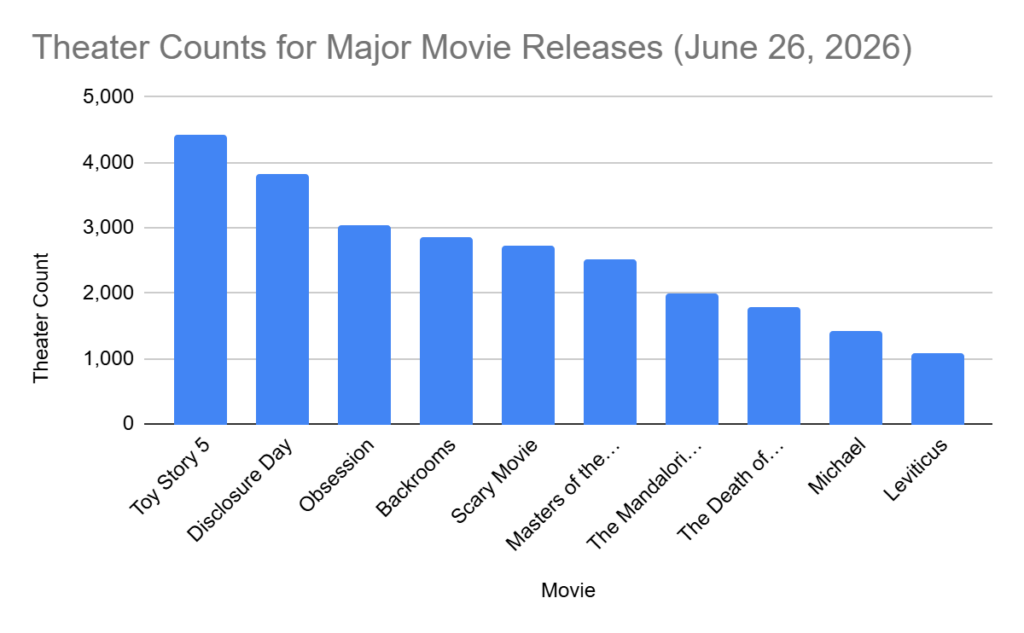
For this Daily Create, I used a bar chart to show data from previously established research. I chose to use a bar chart because it felt like the clearest way to highlight the differences between the values. In class, we looked at examples of really poor data visualizations, and that helped me understand what makes a chart confusing or misleading. Connecting this to Mayer’s multimedia learning theory, a simple bar chart reduces unnecessary cognitive load by avoiding extra visual clutter and keeping the focus on the actual information. Mayer emphasizes that learners process information better when visuals are clean, purposeful, and not overloaded with irrelevant details. That’s exactly what I tried to do; keep the design minimal so the viewer’s working memory is focused on the data itself, not on decorative elements.
One part I didn’t expect was how difficult it would be to find raw data that wasn’t already visualized. It took time to locate a credible source that provided numbers I could actually use. After a bit of a scavenger hunt, I decided to go with the theatre counts for major movie releases, since that information was available in a simple numerical format. I used Google Sheets, entered the data into two columns, and then used the Insert and Chart option to generate the bar chart.
Overall, I’d say that finding the information was the biggest part of the task. It made me realize how intentional you have to be when choosing the right mode of data visualization. This connects directly back to class discussions: the chart isn’t just about displaying numbers, it’s about supporting understanding. Mayer’s theory really clicked for me here, because the whole point is to design visuals that help the viewer learn without overwhelming them. A bar chart fit my dataset and kept everything straightforward, which is exactly what good multimedia design should do.
Daily Creates June 8th – 15th
SUMMARY
Across these three Daily Creates, I started to see how some of Mayer’s multimedia learning ideas showed up in what I was doing. With the miniature‑people story, I was using the dual‑channel principle because I had to look at the picture and then build the story in words, which made me process both at the same time. The meme activity connected to the coherence principle since I had to choose text that actually matched the image without adding anything extra that would distract from the message. And the tongue‑twister recording fit the modality principle because it relied on audio instead of visuals, which made me focus on how I was speaking and how clearly the message came across. Doing these three activities helped me see how different types of media can support learning in different ways. It also made me realize how these same principles could guide the design of educational tools — using the right mix of visuals, text, and audio so learners stay focused and actually understand the material.
#tdc5238 #ds106 #dailycreate #ds106 Find the miniature people in your place, piccture one and tell the story
This daily create asked us to find some miniature people, picture them, and tell something imaginative about meeting them. This is my picture and how I encountered the people :
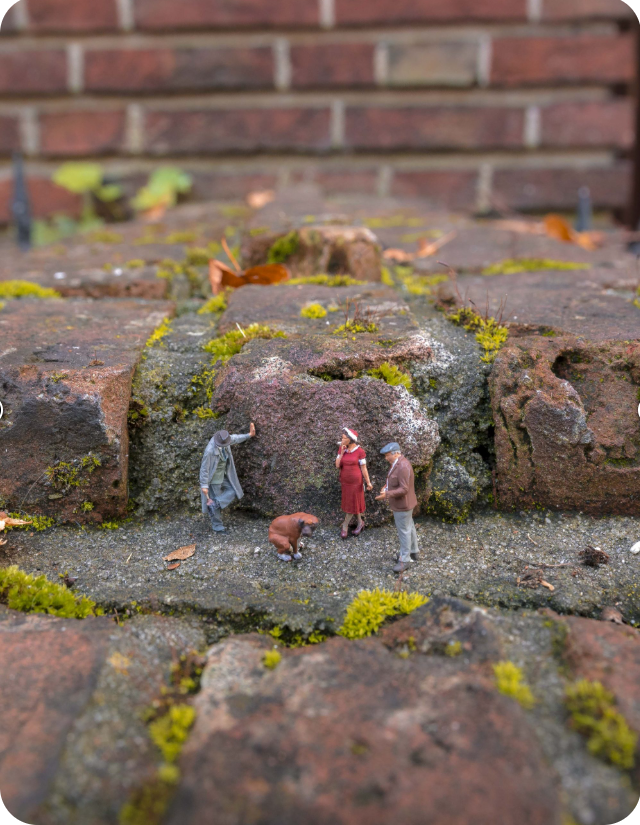
I was just going about my day as usual, taking a stroll in the park. Then I heard barking, it was faint, but definitely there. I turned around, imagining a dog was coming my way; I adore dogs: big or small, friendly or aggressive; all shapes and sizes, I love them all. I turned back and still didn’t spot the dog. I did a full 360 because the sound was becoming more audible, so I thought maybe it was ahead of me, but still nothing. Coincidentally, probably because I was confused, I dropped my keys. I bent down to pick them up as I normally would, and that’s when I heard the barking the loudest. I looked forward, still crouched down, and that’s when I was in awe. I saw a dog and three miniature people, all going about their days as usual. A lady was taking a smoke, a man seemed to be getting something off the bottom of his shoe — “Darn it,” he said. I could’ve screamed at that moment. The man seemed to be waiting on his dog as it hadn’t gone to poop yet. I said a quick “hi guys,” and they said hello back as though this was a frequent occurrence. Although I was in shock, I chose to pick up my keys and keep moving. Maybe I’m the odd one out — what if we’re all meant to be miniature people, and I’m just a giant?.
#tdc5201 #ds106 #dailycreate It’s silly Friday – go make a meme, silly!

This Daily Create asked us to make a meme in celebration of “Silly Friday.” It gave us this meme generator Joe’s meme generator, and it was a pretty easy process. You get a selection of already‑generated images, and all you do is add the text. You can also upload your own image as well. I have some photos of my friends that I would love to make into memes, but unfortunately, if I post them on here, I don’t think we’ll be friends anymore. In all, it was a fun, enlightening process, and that’s one more website I now have access to. This exercise really helped me try to find words that match the moment. It may be funny, but with so many pictures, you have to be very specific about which one matches the message you want to get across.
#tdc4435 #ds106 The 1 Take Tongue Twister
This Daily Create challenged us to record an audio or video of ourselves reciting a tongue twister on our first take. I was able to capture this, and honestly gave it my all. I’ll let the audio speak for itself; you can find the audio recording here:
View on Vocaroo >>
Daily Creates June 1st – June 7th
SUMMARY
This week’s Daily Creates helped me explore my creativity and step out of my comfort zone, and most of all they helped me practice parts of Mayer’s theory of learning without even realizing it at first. Sharing the photo of the shell connected to the multimedia principle because the picture did most of the work in telling the story, and the short explanation just supported it. Drawing the space animals fit with active processing since I had to make choices, imagine details, and figure things out as I went, which kept me involved instead of just looking at something. Completing the unfinished picture matched the personalization principle because I approached it in my own way and let my instincts take over, even when the drawing turned into something totally different from what I expected.
Doing these activities made me think about how I could use the same ideas when designing educational tools. The multimedia principle reminded me that sometimes a single strong image can communicate more than a long explanation, so I’d want to include visuals that actually support the message instead of distracting from it. The active processing piece showed me how important it is to give learners chances to make decisions, try things out, and create meaning for themselves instead of just reading or watching. And the personalization principle made me realize how helpful it is when learners can respond in their own way, using their own style or instincts. Putting all of that together, I can see how using meaningful images, open‑ended prompts, and space for creativity could make educational tools feel more engaging and easier to understand.
#tdc5143 #ds106 Meaningful object
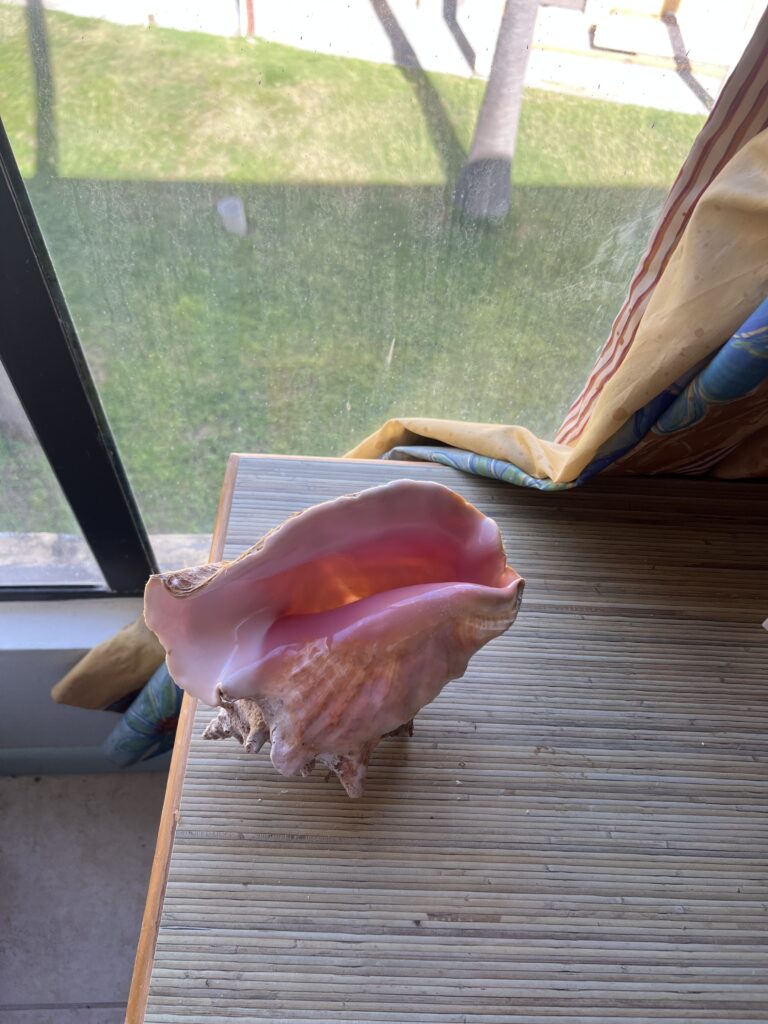
This Daily Create asked us to share a picture or drawing of a meaningful object. I chose this shell. Last week, I wrote about a man I met on the beach in St. Kitts and Nevis, and he’s the one who gave it to me. It became the most beautiful piece I’ve ever owned. Although it doesn’t hold emotional significance in the traditional sense, I was in awe of the pure kindness and selflessness it took to give me something so beautiful as a gift. Unfortunately, I had to leave it behind when I left the island, but I still cherish this picture today.
#tdc5120 #ds106 Space animals
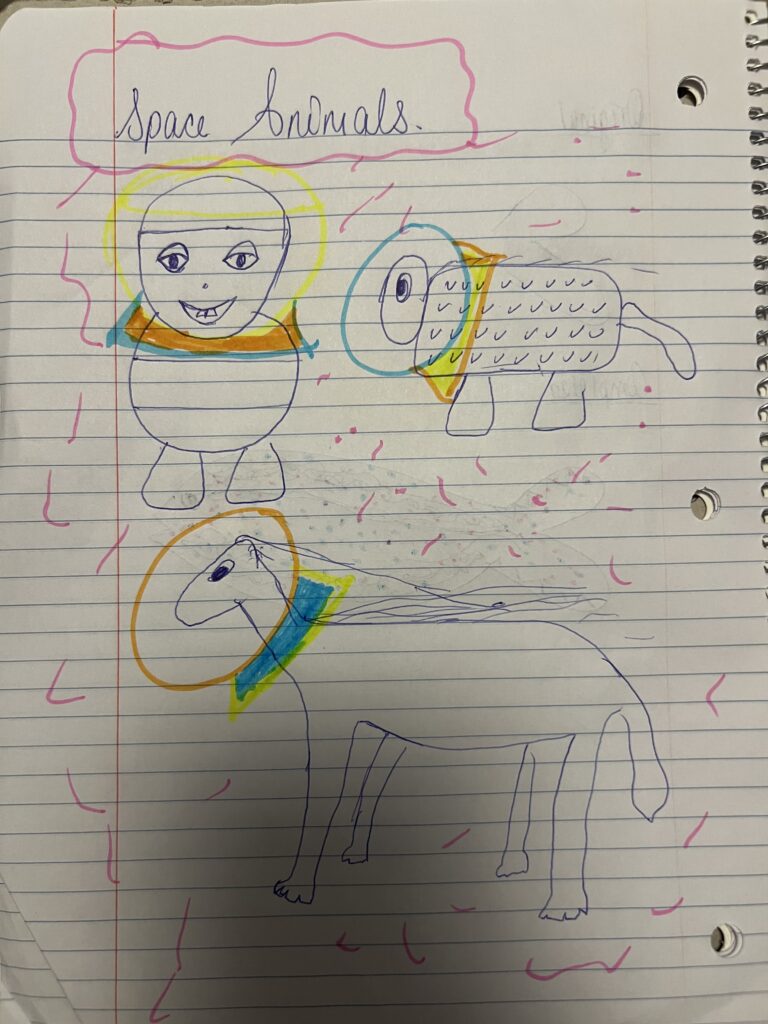
This Daily Create asked us to draw space animals and imagine what they might look like or how they might move. While my art skills aren’t exactly museum‑worthy, my space animals turned out pretty fun. I started by trying to draw a panda, that’s what the first animal in the top left was originally meant to be. For some reason, a panda was the first creature that came to mind. As I kept drawing, I realized not everything had to be logical. I could just let the weirdness happen and enjoy the creativity of it.
#tdc4581 #ds106 Complete the picture
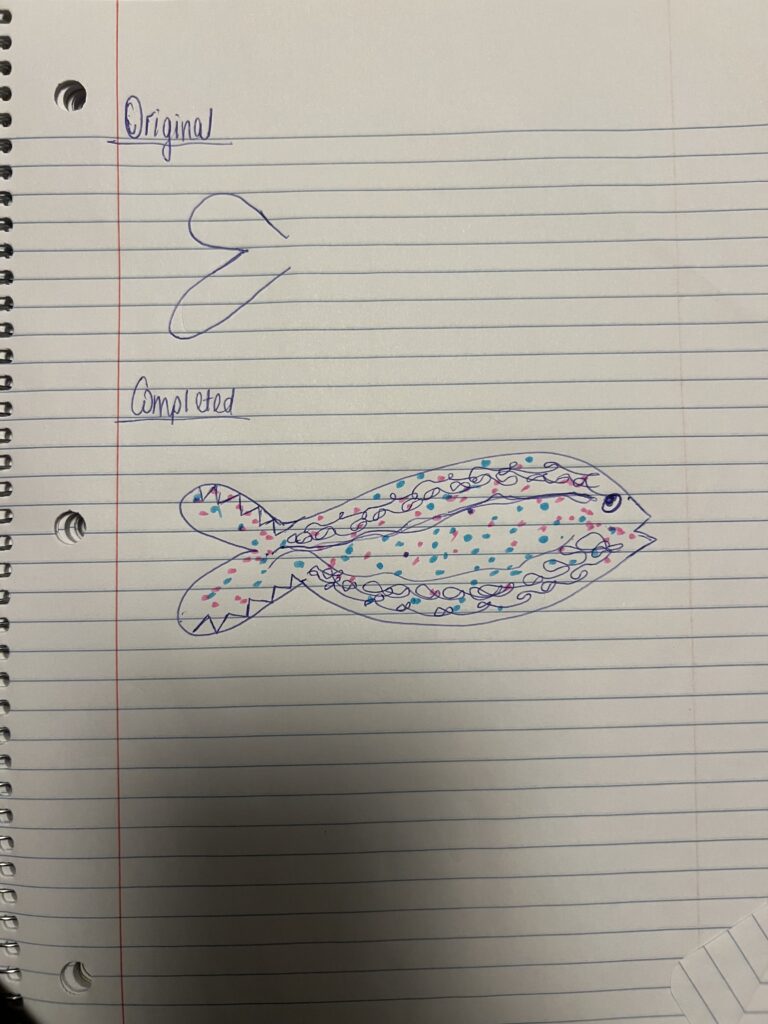
This Daily Create asked us to complete the drawing. At first, when I saw the unfinished picture, I immediately thought of a butterfly. But once my own pen hit the paper, I somehow ended up drawing a fish instead. It’s funny how instinct works. I don’t even draw fish normally, so I’m not sure where that came from. Still, it was fun to see how the drawing took on a life of its own. As you can probably tell from the quality of my drawings, I don’t usually dabble in art. But these prompts were genuinely fun, and they pushed me to try things I normally wouldn’t. I might practice more and try to upgrade my skills.
Daily Creates May 25 – 31
SUMMARY
This week’s Daily Creates pushed me to experiment with sound and audio in ways I’ve never tried before. Making my own beats on the 108 website was completely new to me, and even though it was harder than I expected, it helped me understand how much trial‑and‑error goes into creating something that actually sounds good. Turning regular words into jazz was chaotic in the best way, and using one of my favourite memories made it even better. Creating an audio quote also gave me a chance to practice recording my voice and thinking about how sound alone can communicate a message. Overall, these Daily Creates helped me get more comfortable working with audio tools and expressing ideas in different formats.
Working with audio this week also helped me see how some of Mayer’s learning principles showed up in what I was doing. Making the beat connected to active processing because I had to keep testing sounds, adjusting patterns, and figuring out what actually worked, which kept me fully involved instead of just listening. Turning my words into jazz tied into the modality principle since the meaning came through sound alone, and I had to think about how audio can shape a message without any visuals. Recording the audio quote lined up with the voice principle because using my own voice made the message feel more personal and natural, which is exactly what Mayer says helps people connect with what they’re hearing.
Seeing these principles in action made me realize how useful they could be when designing educational tools. The modality principle showed me that audio can make certain ideas clearer than text, especially when tone or pacing matters. Active processing reminded me to include opportunities for learners to experiment and make decisions instead of just listening. And the voice principle made me see how using natural, human‑sounding narration can make learning feel more personal and easier to connect with
#tdc4546 #ds106 Make A Browser Beat – Share a Browser Beat
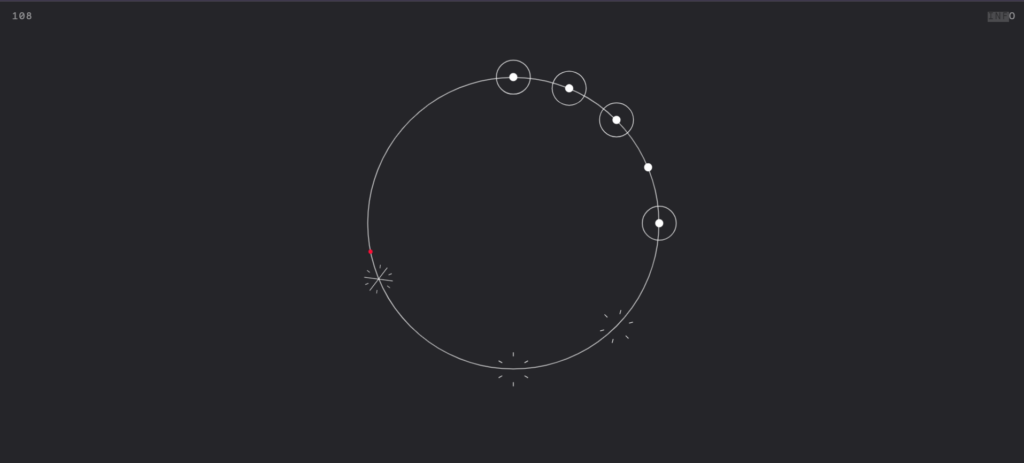
Today’s daily create challenged me to make my own beats, using the 108 website. I had never done this before, so it was an interesting experience. It was definitely much harder than I thought it would be – not making the beats themselves- but just actually making good beats. Anyways, this is what I was able to come up with: https://martinwecke.de/108/If anyone’s interested in adding some lyrics to my beat, drop a comment, and we’ll get in the studio. I’ve also included a screenshot of the visual representation of my beats.
#tdc4304 #ds106 #ds106 Your Words as Music
Today’s daily create challenged me to make music using regular words. Just type up words, and the website turns them into some type of Jazz. Funny enough, jazz is one of the genres of music I listen to the most, so this was extra exciting for me. I decided to type the story of a man I met on the beach while I was on the beach. He was a very unique and memorable character – he gave me goggles to see the fish, gifted me the most beautiful shell, and scared the heck out of me. It’s a memory I hope not to forget, hence why I chose to turn it into music. This is my piece of jazz( pay no attention to the creative process, please:) ) https://jazzkeys.plan8.co/?msg=dddc8371-ecff-4858-9fa1-e1d8831fb504
#tdc5008 #ds106 Make an Audio Quote
For today’s daily create, I made an audio quote- an audible recording of a quote. I’ll let the audio recording pass along the message for this daily create, hence the short write-up. But I really like the concept of this daily create; it’s the perfect opportunity to spread more positivity in the world. Without further ado, here is my audio quote: View on Vocaroo >>
Daily Creates May 18 – 24
SUMMARY
Doing all these Daily Creates this week really showed me how useful it is to experiment with different types of media, and it also made me notice how some parts of Mayer’s multimedia learning theory showed up without me even trying. Visualizing the music connected to the coherence principle because the tool focused only on the sound and the image it created, which made it easier to pay attention to what actually mattered. The Nostalgia Machine reminded me of the pre‑training principle since it used songs I already knew, and that familiarity made it easier to connect new feelings and memories to something I recognized. And the pronunciation task fit naturally with the modality principle because hearing the word out loud then trying to say it myself made it way easier to process than just reading the spelling. Doing these activities made me realize how different media can shape understanding in simple, everyday ways.
How This Helps Me Design Better Tools
When I think about designing educational tools, this week’s Daily Creates gave me a clearer idea of what actually works in practice. Trying out things like visualizing music, playing with nostalgia, and even pronouncing a complicated word showed me how much people learn when the media feels meaningful and easy to connect with. I’d want to use that same approach by choosing visuals, sounds, or examples that actually support the message instead of distracting from it, which lines up with the coherence principle. The Nostalgia Machine reminded me how helpful it is when learners start with something familiar, which connects to the pre‑training principle- giving people a base to build on makes new information easier to understand. And the pronunciation task showed me how useful audio can be for things that text alone can’t really explain, which fits the modality principle. Putting all of that together, I can see myself designing tools that mix simple visuals, clear audio, and relatable examples so learning feels more natural and easier to follow.
#tdc5206 #ds106 #dailycreate Visualize The Music
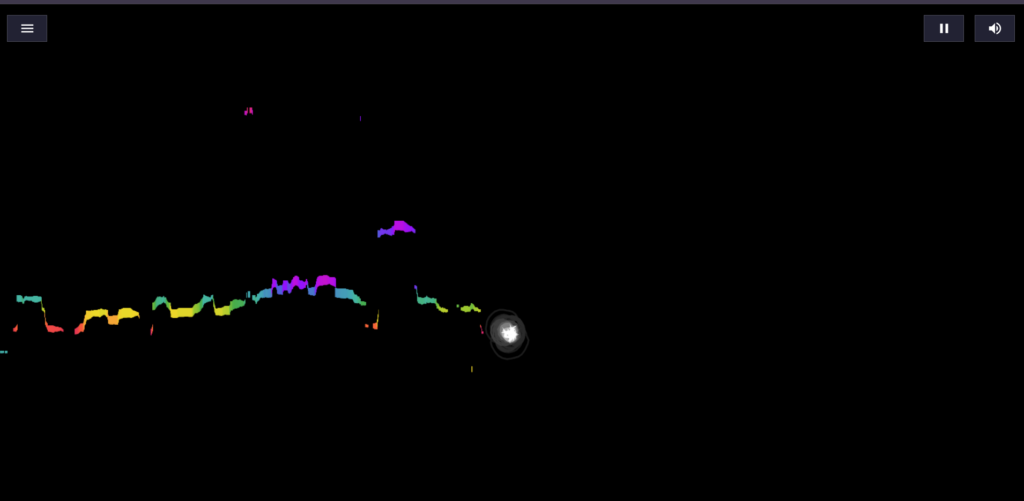
This daily create prompted users to make visual art from music. Just like a couple of other daily creates, I had no idea this technology was even available. I was able to take a look at a couple of others, and unfortunately, my image is not as “cool” as I expected. But in all, this was fun, and I will definitely be trying this again with more songs. This is my image, I was singing I Get Backing by Victoria Orenze:
#tdc5065 #ds106 Going All Nostalgic On Us
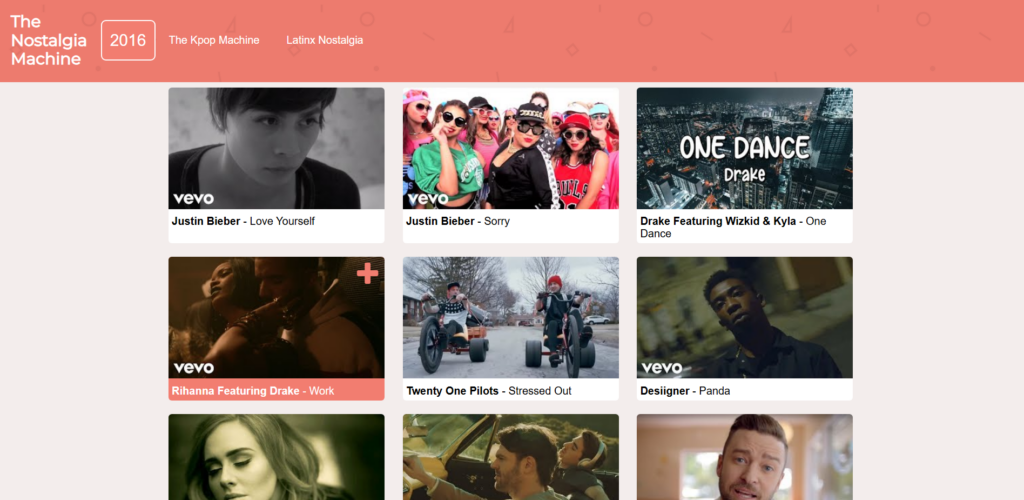
This daily create prompted users to make use of a Nostalgia Machine, all you do is input a year from your childhood, and it displays all kinds of music from then. This definitely took me back. I chose the year 2016 because that truly was the last year I felt like a child – no worries, no problems, just games, family, and TV. The website brought up songs I had not thought of in ages, like Panda by Desiigner and What Do You Mean by Justin Bieber. It reminded me of the videos my sister and I would upload on Musically, now called TikTok; we did not care about being shamed, embarrassed, or “cringe.” I was transported back to a time I almost forgot once existed. I enjoyed this activity and will definitely share this with my sister.
#tdc5142 #ds106 Pronounce This
In this Daily Create, we had to pronounce a word. At first, it seems very trivial- why would this even be a task? Until I saw one of the most complex words I’ve ever seen before, Floccinaucinihilification. I was caught off-guard and immediately burst into laughter. What does the word even mean? According to the Cambridge Dictionary, floccinaucinihilification is the act of considering something to be not at all important or useful. How could such a complex word have such a simple meaning- that’s the beauty of the English Language. I wish I could’ve caught my first attempt at this on video, but this is me after a few tries at it: View on Vocaroo >>
Daily Creates- May 11- 17th
SUMMARY
Doing the Daily Creates this week really showed me how different types of media can shape the way we understand things. When I tried to describe silence, I had to pay attention to the feeling of it and cut out anything that didn’t belong. That connects to the coherence principle because it reminded me how much clearer something becomes when you remove extra details that don’t help the message. The text‑weaving activity had me take a quote I already knew and turn it into something visual, and doing that made me think harder about what the words were actually saying. That fits with generative processing since the whole point is that you learn more when you transform information instead of just reading it. Creating a four‑word dystopia made me rely on my own voice and the feeling behind the words, which connects to the personalization principle because it showed me how using natural, personal language can make an idea easier to understand. Doing these tasks helped me see how each mode of expression changes the way a message comes across, and how Mayer’s ideas show up even in small creative moments.
Applying These Ideas to My Own Designs
When I think about designing educational tools, these activities gave me a clearer sense of what actually helps people learn. The coherence principle reminded me to keep things simple and avoid adding extra content that doesn’t support the main idea. Generative processing showed me the value of giving learners short, creative prompts that make them think and interpret instead of just receiving information. And the personalization principle made me realize how important it is to let learners bring their own voice, experiences, or examples into the process. Putting all of that together, I can see myself designing tools that use clear visuals, meaningful prompts, and space for personal expression so learning feels more engaging, more flexible, and easier to connect with.
#tdc5185 #ds106 #dailycreate Describe in writing for someone who cannot hear, the feeling of silence
For today’s daily create, we were asked to describe silence to someone who hears no sound. I had never thought of this before, so it took me some time and deep searching. Thi sis what I was able to come up with
“Silence is absence; to some, silence is loneliness.
Just like when you close your eyes, and there’s no one in the room. In that moment, it’s only you – no distractions, no outside influence. Just you with your inner thoughts, a chance to explore the deep corners of your mind. ”
It is not the best description, but it was my best attempt to put my ideas into words. While this description does not fully convey the totality of what silence may truly be, it gives some insight into how I view silence. As someone who is always looking for the next thing to do, silence can sometimes mean just loneliness.
#tdc5194 #ds106 #dailycreate Text Weave
In today’s daily create, we were asked to use this site to “weave the web of words.” I was quite fascinated by this task and the technology behind it. I never knew I could weave words – the only thing that comes to mind when I hear the word “weave” is my hair. In all, it was a fun task. The site also gives a good explanation of the concept behind text weaving. Below is my text weave and what I wrote
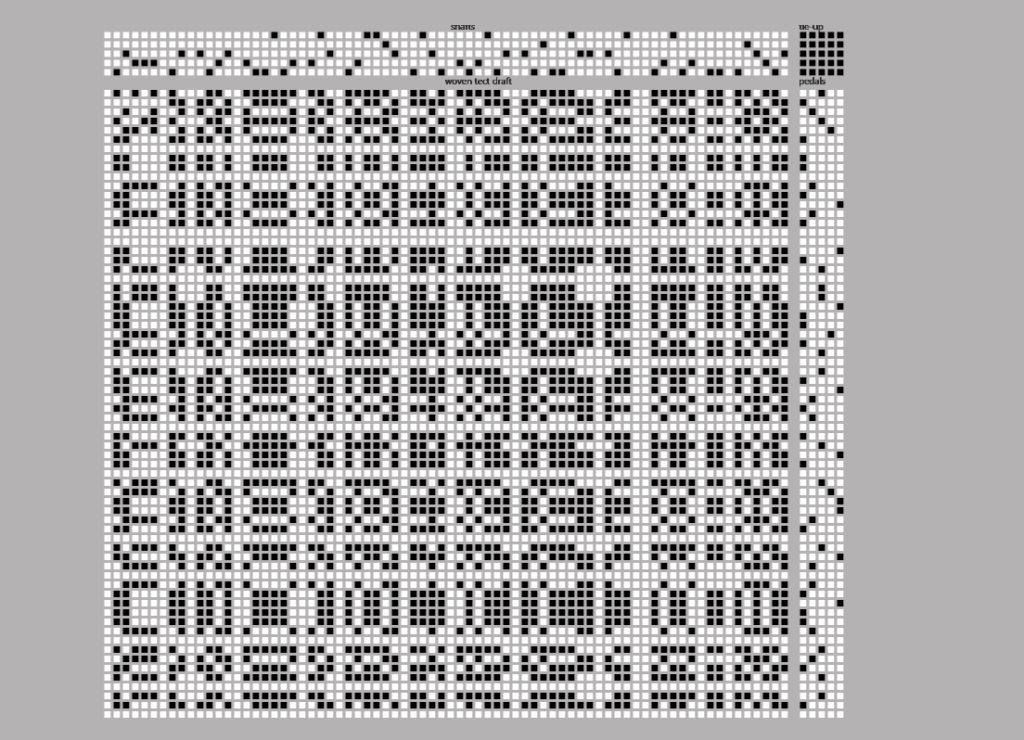
“When there is life, there is hope” – This was said by a Mulikat Okanlawan, a Noma Survivor who now advocates for people who may struggle with the disease – showing them that there is life after Noma. I casually came across her story while searching for a research article to study; for whatever reason, that clause has stayed with me ever since.
#tdc5212 #ds106 #dailycreate 6 Word Stories, Easy… Do 4 Word Dystopias
In today’s daily create, we were asked to create 4 word dystopias, quite similar to Hemingway and his six words on baby shoes.
Now, I say this with shame, I had never heard of Hemingway’s six words on baby shoes until 30 minutes ago. But it was very interesting to read about, especially because it is speculated that the story was misattributed to him; he was 7 when the story first appeared!
This daily create made me think deep into what a dystopian society would look like to me. It was filled with hunger, pollution, desperation, and lawlessness. Honestly, it’s not so far from what happens today, in certain parts of the world. But, this is what I came up with: “Last one, need water.”
Recent Comments